
It’s your first day working at a restaurant, dinner service has barely started, and you’re already confused. Plates clatter, timers are relentlessly beeping, and somewhere between the grill and the dishpit someone calls out, “I’m in the weeds!”
You freeze. Weeds?! There are no plants in here; what on earth are they talking about?
Moments later you hear:
“Fire table twelve!”
“86 on the salmon!”
“It’s dying in the window!” (something’s dying in here?!)
It’s chaos as an outsider, but to everyone else, it’s a language of its own. It’s fast, efficient, and strangely musical when you get used to it.
The kitchen is full of shorthand phrases like this, ones that convey very important information in just a few words. It’s crucial for any food service workers to know (especially kitchen staff).
Here’s what the phrases listed above mean:
In the Weeds: “Our station is overwhelmed. SOS”
When tickets are stacking faster than you can plate them, you’re officially “in the weeds.” Every kitchen has been there… countless times.
What to do: Offer a hand, if you can. Run food, plate a dish, and refill prep stations. Even small help when you can helps keep the kitchen moving and builds a team that trusts each other.
Make sure you aren’t leaving your own station to flounder in the process; we wouldn’t want two in the weeds!
It’s Dying in the Window: “Why in the World is this still sitting in the Pass?”
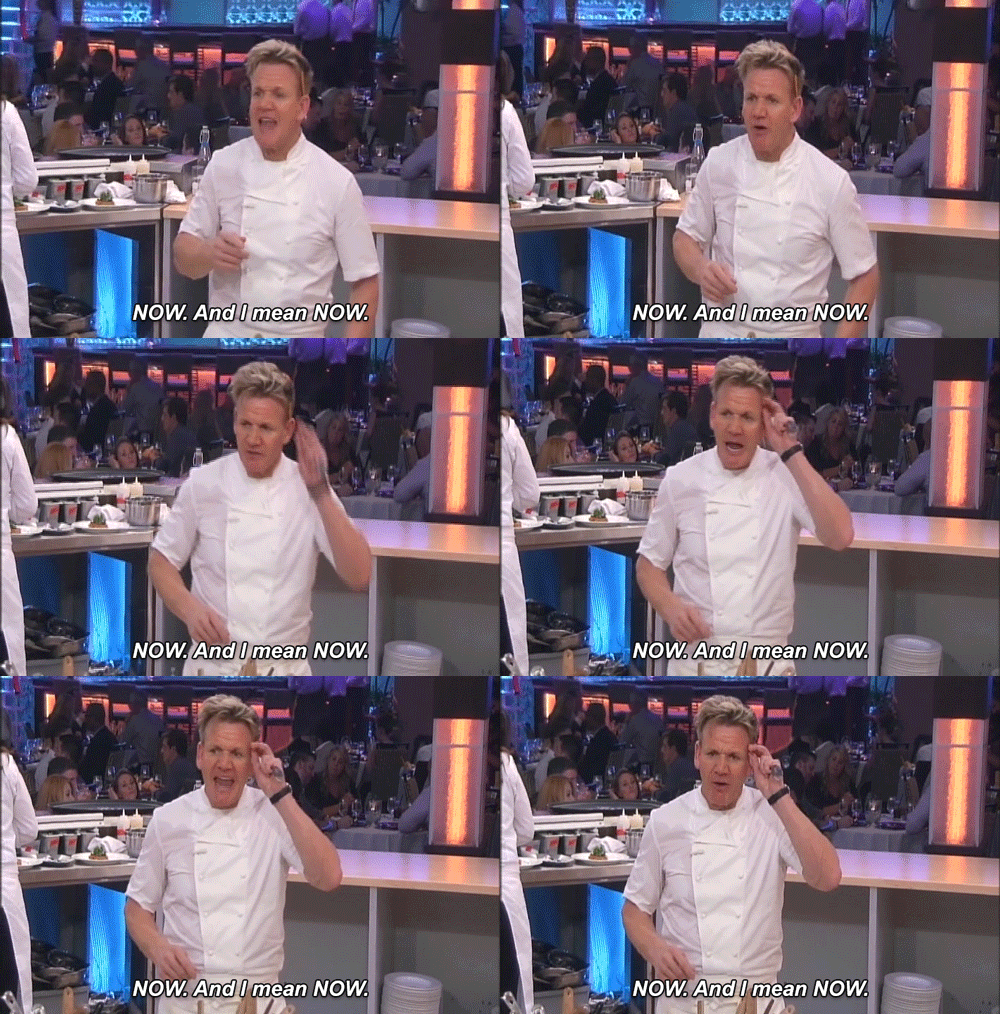
Don’t worry; when someone says this, nothing is actually dying. “It’s dying in the window” is a way for the Chef to say a dish has been sitting in the window for too long and needs to get to the customer ASAP. In this case, ‘the window’ refers to the shelves completed dishes go to, to stay warm under a heat lamp if needed or just wait on a shelf to be served. The goal is to only have a dish sitting in the window for a few minutes.
What to do: If possible, help remind expo or front of house that the dish is ready to go out. And if you are on expo? Get it out to the dining room. Quickly. Every second the plate sits on the shelf, the more the texture, presentation, taste, and more degrades.
On the Line: The place cooking lives
The “line” is where the cooking happens: grilling, frying, sautéing, and more. You could call it the choreography of the kitchen.
What to do: Respect the flow of the kitchen. Stay in your lane unless Chef says otherwise, keep your station clean, and try to anticipate what’s coming next… but be ready for things to change on a dime. Smooth lines make for smooth nights.
86: Don’t even think about this dish anymore

When something is “86’d,” it’s gone. Out of stock. It can be a menu item, an ingredient, or even a side dish. Whatever is attached to the phrase, it doesn’t exist for the night until said otherwise.
What to do: Be aware of it and communicate fast. If you’re the one calling it, you need to shout it from the rooftops. Everyone needs to know, from the prep cooks to the entire front-of-house staff. That way orders can be updated as needed.
Fire: Your New Priority
It may seem like a bad idea to call out “fire” in a kitchen full of flammable things. But, in this case, it doesn’t mean there are ill-placed flames anywhere; it means there’s something that needs to be started immediately. Timing is everything; this call keeps the kitchen’s rhythm in sync.
What to do: When you hear it, double-check your timing. Make sure your station’s part of the order involved is ready when it needs to be. That way it can hit the window right when it’s necessary.
Most importantly: Breathe.
It might sound like chaos at first, but there’s a method to the madness. Kitchen lingo exists because there’s no time for long-winded explanations in a kitchen when orders need to be flying out to the dining room. Every “fire” and “86” saves seconds that can be spent elsewhere, and those seconds add up.
Whether you’re a new restaurant owner learning how to best work with your staff or a new employee, if you’re overwhelmed with the language used to organize a kitchen, breathe and ask questions. Work to learn the language, and gradually, the chaos will turn into something that feels like a well-oiled machine.
In a great kitchen, this communication isn’t just helpful; it’s a secret ingredient that keeps things running.

0 Comments