When restaurant owners think about a new build or remodel, they often picture the end goal: shiny equipment, perfectly plated dishes, and a kitchen that runs like a well-oiled machine. What they don’t see is the behind-the-scenes design process that is needed to successfully bring all of that to life.
We think kitchen design deserves a lot more credit in the process, so we talked with our head designer, Brandon, to hear a bit more about what happens from when you bring us your vision to the final product.
What a Layout Actually Tells You (and What It Doesn’t)
Layouts are more than just lines and measurements. It’s the first time your vision is brought to life visually. The thing with layouts, though, while crucial in the design and construction process, is that they don’t tell the full story. 2D doesn’t always show bottlenecks that can arise.
Because of this, we asked Brandon for an example of this, and he said,
“One of the best examples of something that looked totally fine in 2D but became a problem once we dug deeper is when we try to put two levels of shelving over a slicer. Those things are taller than we think and need lots of clearance.”
In instances like that, we can’t actually see how tall the slicer is or what it’ll look like with the shelves. Why? Because in a 2D drawing, you see the placement of the equipment, but you can’t see its size in a bird’s-eye view.
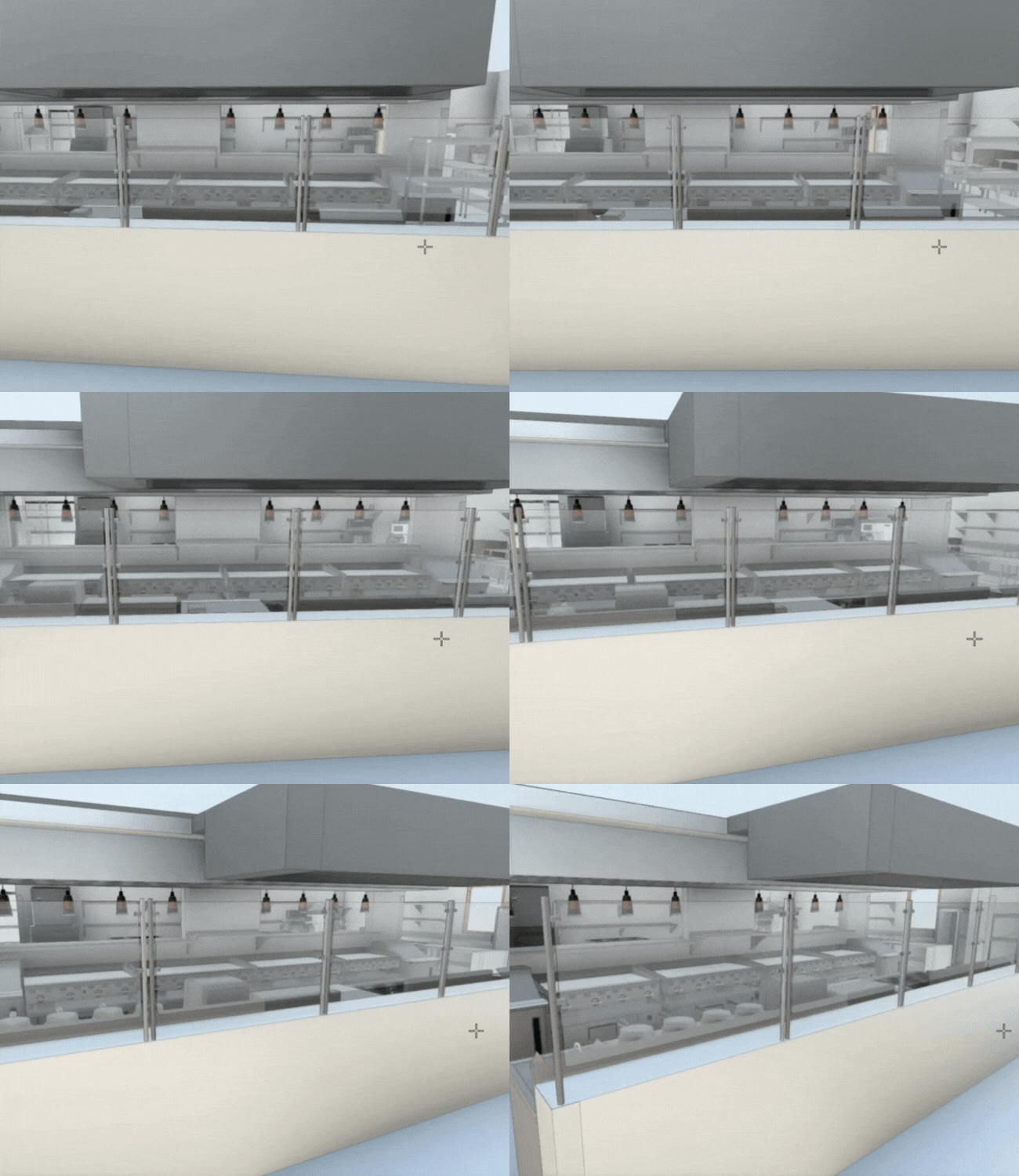
A layout can show spacing, appliance placement, and electrical layouts, but it can’t always convey height, sight lines, or flow. That’s where the magic of 3D comes in.
The Handoff From 2D to 3D
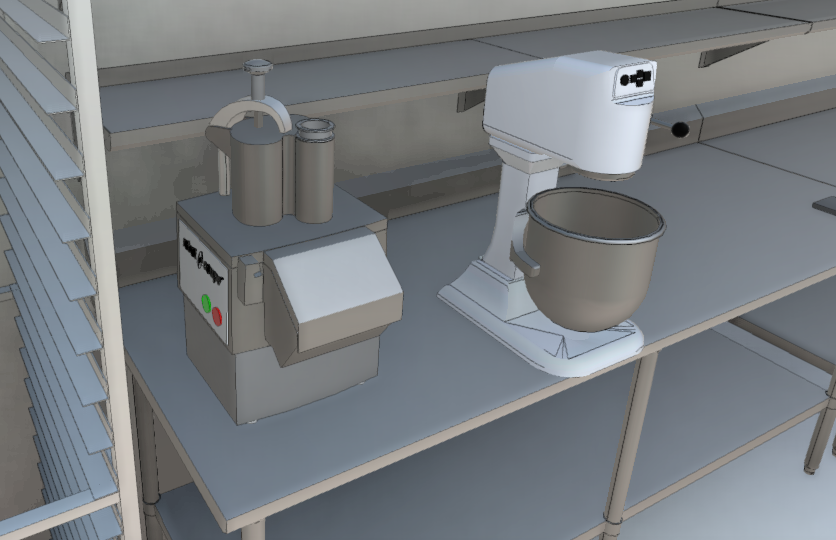
Once the project is moved to Revit, a 3D design software, the design comes alive. “We can quickly see which walls should be full walls versus pony walls, as well as sight lines we may or may not want guests to see,” Brandon explains. For example, the image above shows how a 3D rendering showed that the equipment is too tall to fit under the shelf. This makes it inefficient, taking up more counter space that could be used for other things. Open kitchens? Perfect for guests. Dirty dishes in view? Not so much.
The 3D model allows you to simulate the real-world experience before it’s built. You can walk through the space virtually, check equipment clearances, and ensure everything works before you have a single screw installed. This step constantly catches issues early, saving time, money, and stress during the installation.
Collaboration at Every Step
Good design can’t be done in isolation. “We collaborate with the project manager and client at every step of the way,” says Brandon. “The more the PM and customer are involved, the better we can assure we’re doing what they want while fitting the budget and the needs of the space while keeping ROI high and making sure it actually works the way it’s supposed to.”
Early input is critical. Menu details, accurate measurements, and even photos of existing spaces help understand the client’s needs and goals. That information allows our designers to design a kitchen that supports the menu, workflow, and overall guest experience.
Before and After: Bringing Dreams to Life
The best part of the process? It’s hands down seeing your project come to life. Take it from Brandon:
“We are here to make their dreams come to life. First in the virtual world, then in the real world—and we truly love what we do!”
From small adjustments to shelving heights to major layout changes made when seeing the design in 3D, each project involves a careful balance of art, math, and practical experience. This combination of 2D and 3D virtual models allows us to anticipate challenges before they happen, while collaboration ensures the kitchen is functional, efficient, and everything you want it to be.
Why It Matters
Good design is invisible when it’s working well, because it just… well, works. A layout that looks “good enough” on paper can cause chaos (or major costs) in the field.
Detailed design work, from the first layout to the final 3D model, helps:
- Avoid expensive change orders
- Prevent workflow issues that slow down service
- Catch clearance and code conflicts early
- Reduce project overrun
- Increase long-term ROI by designing around how the space actually functions
Great design doesn’t just make a kitchen look good. It makes it profitable, efficient, and built to last.
At the end of the day, a well-designed kitchen is more than layouts and Revit models; it’s the foundation of a successful restaurant. And behind every great layout is a team full of people like Brandon that are passionate about turning dreams into reality.
0 Comments