In our experience, when people talk about opening or renovating a restaurant, their minds automatically lock onto the big things: the concept, branding, menu, equipment… things like that.
Those things matter. A lot.
But there are some things on the ‘VIP’ (aka the ‘Very Important Pieces’) list that often get overlooked but make or break the effectiveness of a space and the experience the customer has.
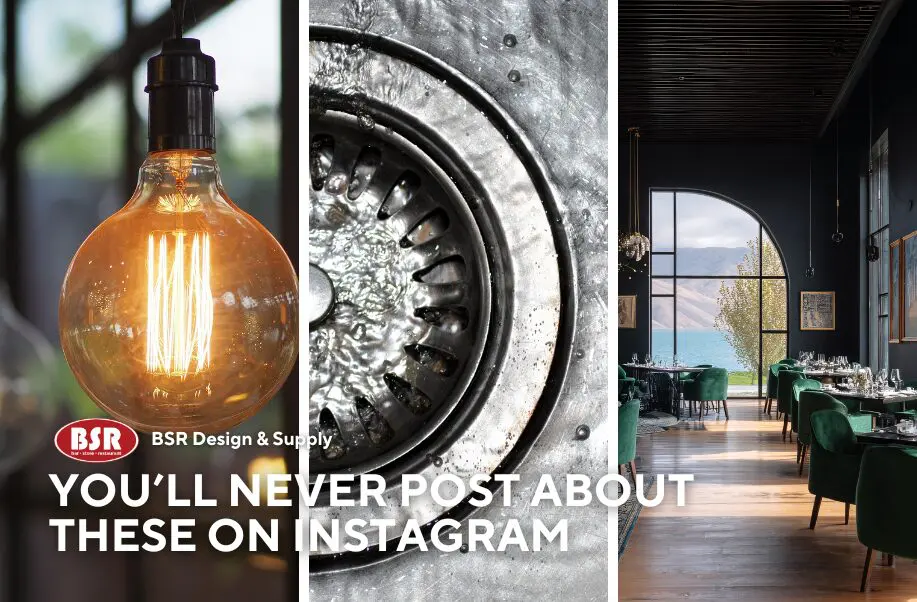
It’s the things that don’t end up on a restaurant’s Instagram feed that can determine whether a restaurant runs smoothly… or struggles every shift.
Some of the most important decisions are the ones no one talks about; here are a few of them:
Lighting That Supports Service, Not Just Style
Lighting isn’t just about setting the mood; it’s also about function.
Have a light that’s too bright? Guests might feel like they’re in a cafeteria. But if they’re dimmed too much, servers have to squint to see tickets, and guests can’t read the menu. Not only that, but the wrong placement can create shadows across plates, making food look unappealing, or a glare that’s uncomfortable during a long meal.
Try thinking of lighting in layers: ambient, task, and accent. Look at lighting as an operational and experiential tool. Ask yourself, is there enough lighting in prep areas? Does the dining area feel warm without feeling too dim?
When lighting is done right? Nobody comments on it; it blends into the experience.
Drainage: Not Glamorous, but Essential
It’s highly unlikely that drainage made it onto your restaurant’s Pinterest or vision board, but it can make or break the flow of a kitchen.
Improper angles, poor placement, or hard-to-access drains can lead to standing water, safety hazards, sanitation issues, and expensive maintenance down the line. Flooring materials matter just as much: slip resistance, durability, cleanability, and how they perform during long, high-volume shifts.
Think of them as part of the pit crew for the kitchen. They’re not necessarily glamorous, but they’re critical for protecting staff, meeting health codes, and keeping kitchens running efficiently.
Clearance and Circulation
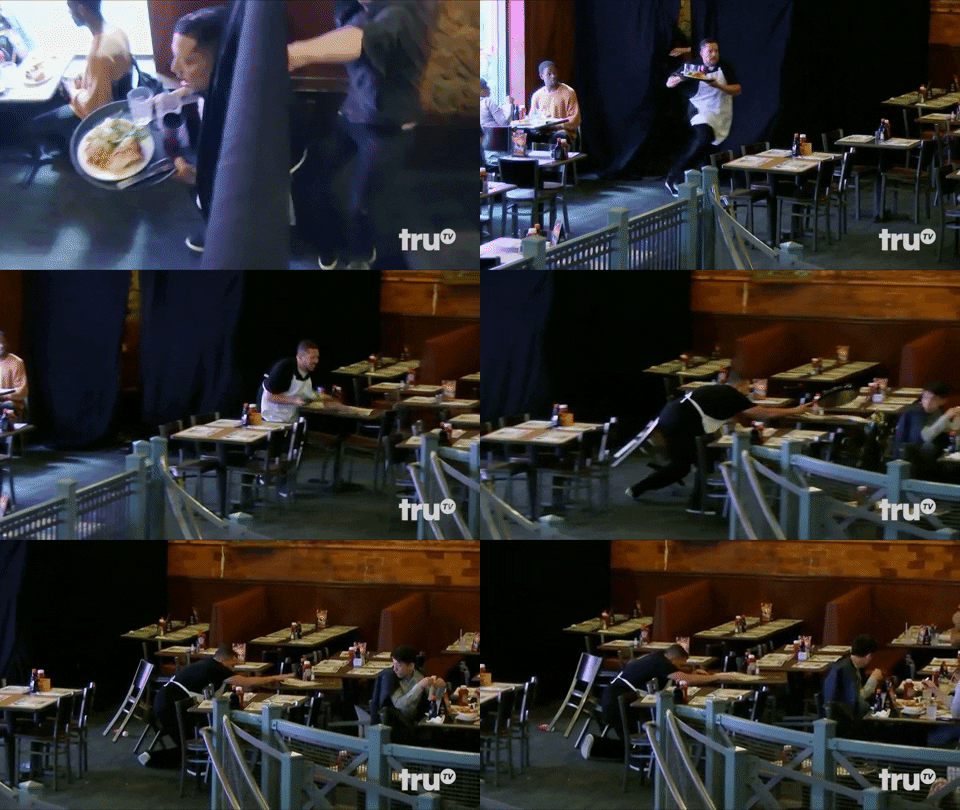
Ever tried on a piece of clothing that you loved but was too small so you couldn’t move? It’s likely that you put it back because it wasn’t functional. Think of your kitchen layout in the same way.
A layout may be beautiful, but it means nothing if your staff can’t move and it’s not functional.
It’s important to carefully plan aisle widths, service path locations, and clearances around equipment, prep areas, and seating. Just a few inches of space can help determine the stress level of a shift.
For guests, good circulation means they’re not constantly bumped by servers or navigating awkward bottlenecks on the way to the restroom. For staff, it means fewer collisions, faster service, and less fatigue.
Flow matters more than people realize.
Tabletop Setups That Shape the Experience
Have you ever been at a restaurant and you’re struggling to find space for everyone’s plates? That could be because tabletop was neglected in the planning process. Tabletop design might feel simple, but it’s one of the most tactile parts of the guest experience.
Table height, chair comfort, how much space is between plate settings, and even the shape of the table all change how long guests stick around and how they feel. Do your plates fit the type of food your serving? Do the tables fit the right number of those plates on them? Can the servers clear the space efficiently without interrupting the conversation too heavily?
A well-designed tabletop setup quietly supports hospitality without ever demanding attention.
The Power of the Unseen

The best restaurants don’t feel complicated; they feel natural.
That’s because hundreds of behind-the-scenes decisions are working together: supporting staff, protecting guests, meeting codes, improving speed, and preventing problems before they start.
These decisions and factors will likely never see the light of day on restaurant vision boards or social media, and we easily understand why. But, this is your reminder to add the unglamorous decisions to your list now, so you don’t suffer later.
Need to start working on these decisions? Let’s get started!
0 Comments