
Designing a Senior Living Kitchen That Meets Today’s Expectations
Senior living dining programs have changed dramatically, and the kitchen needs to keep up. Today’s residents, many of them boomers who’ve eaten at great restaurants their whole lives, aren’t settling for institutional food served in an institutional way. And honestly? They shouldn’t have to.
Here’s what a senior living kitchen needs to meet those expectations in 2026.
Flexibility Isn’t Optional Anymore

The cafeteria model is on its way out. More and more senior living communities are moving toward a restaurant-style experience: different dining options throughout the day, flexible seating, and menus that seasonally change. That’s great for residents. But it puts real pressure on the kitchen
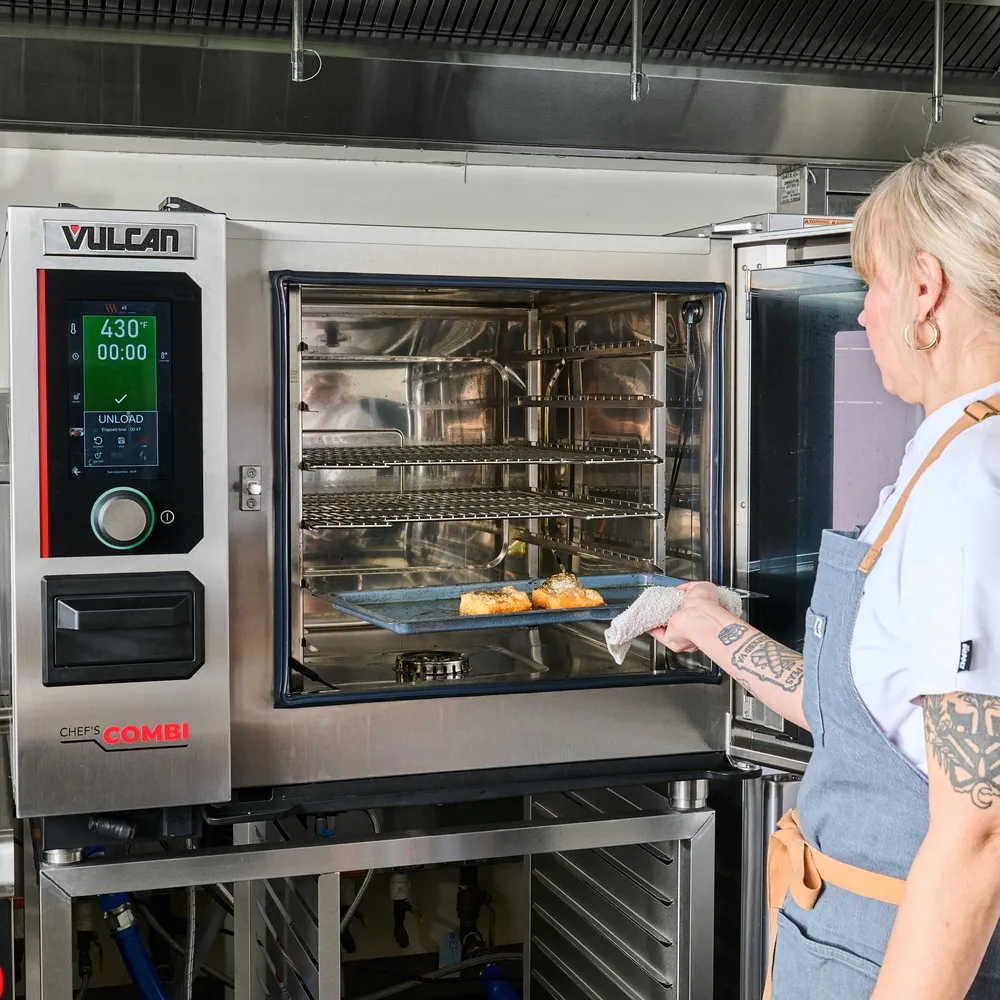
Flexibility is needed in a kitchen that needs to produce grab-and-go items, a casual lunch, freshly baked desserts, or a plated dinner. Your equipment lineup and your layout need to be able to shift with you. Think Combi ovens that can roast, steam, bake, or reheat on demand. Think storage that keeps multiple menu components organized and accessible. Think flow.
Layout: Get the Flow Right First
Before you pick a single piece of equipment, think about how your team actually moves through the space. In a senior living kitchen, you’ve got more going on than a typical restaurant. Dietary modifications, multiple meal formats, and staff who may be navigating the kitchen alongside supply carts and trays all at once.
Clear zones for prep, cooking, plating, and dishwashing prevent the kind of congestion that slows everything down (and stresses everyone out). Wide aisles aren’t a luxury here; they’re a necessity. And if you can work in an open pass-through or partial open kitchen, do it. Residents love seeing and smelling food being prepared, and for many seniors, that sensory experience actually stimulates appetite.
The Right Equipment Pulls Its Weight Every Single Day
Senior dining isn’t a once-a-week event. It’s three meals a day, seven days a week, 365 days a year. Equipment downtime isn’t just inconvenient; it can genuinely disrupt care. So reliability matters more here than almost anywhere else.
Combi ovens are a workhorse in this setting. They handle proteins, vegetables, and reheating all while preserving texture and nutrition, which is huge when you’re serving residents with specific dietary needs. Blast chillers and solid refrigerated storage keep you compliant and reduce waste. And commercial-grade everything means you’re not calling for repairs every few months.
Bottom line: buy it right the first time.
Dietary Complexity Is the New Normal
Low sodium. Diabetic-friendly. Texture-modified. Allergen-free. In a senior living kitchen, you’re often handling all of these at the same time for the same meal service. That means organized, clearly labeled prep areas that prevent cross-contamination, storage that keeps everything properly rotated, and equipment that gives you the precision to execute consistently.
This isn’t something you can wing with a poorly laid-out kitchen. The design has to support the complexity so your team can focus on the food, not on navigating chaos.
We’ve Helped Design Kitchens Like This
At BSR Design & Supplies, we work with retirement communities, hospitals, healthcare facilities, schools, and all kinds of food service operations. We know that a senior living kitchen has its own demands, and we know how to design around them.
Whether you’re building from scratch, upgrading aging equipment, or just trying to figure out where to start, we’re here to help. Reach out and let’s talk through what your kitchen actually needs.

0 Comments