by BSR Marketing | Feb 12, 2026 | Uncategorized
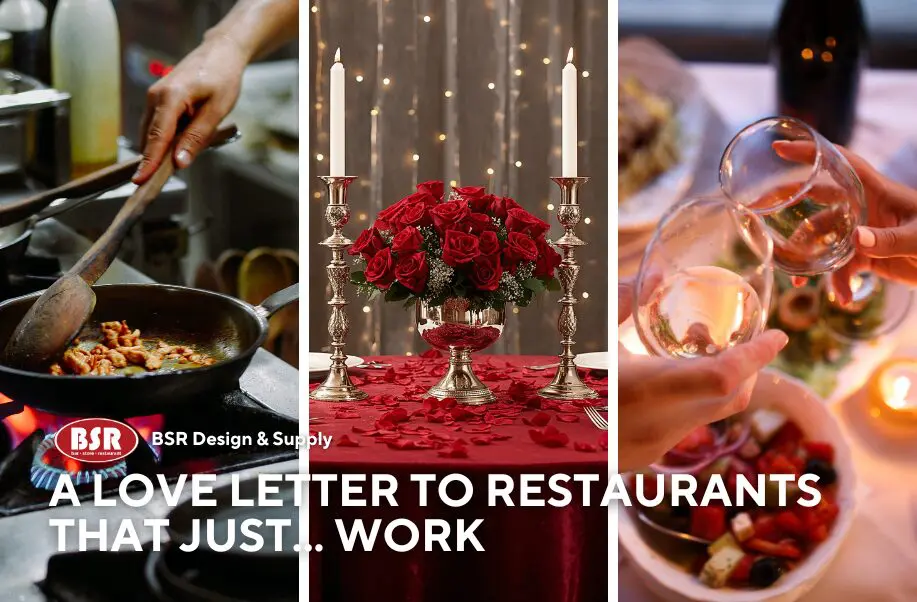
Dear Well-Run Restaurants, Impeccable Kitchens, and Every Foodservice Operation That Makes It Look Easy,
We need to tell you something: we see you.
We see you in the way a server glides through a packed Friday night dining room without a single wobble, carrying a tray of perfectly chilled martini glasses that catch the light just right. We see you in the kitchen, where every cook knows exactly where to reach for the right pan, the right spatula, and the right squeeze bottle, because everything has its place and nothing is ever missing.
We see you in the details most people never notice: the weight of a proper steak knife in the hand, the satisfying click of a well-fitted lid, and the way every plate that leaves your kitchen sits on a shelf that’s actually clean because you have enough backups to run them through the dish pit without panic.
You make magic happen, but here’s what we really love about you: your magic isn’t chaos. It’s not held together with duct tape and prayers. It’s not a chef screaming to “make it work” with mismatched pans and chipped plates.
Your magic is systems. Your magic is infrastructure. Your magic is beautiful, boring reliability.
You’re the restaurant where the bartender never has to frantically polish water spots off glassware mid-service because you invested in proper stemware that actually dries clean. You’re the kitchen where sauté pans heat evenly because someone made the decision to buy quality, not just whatever was cheapest. You’re the dining room where every fork matches, every water glass is the same height, and the entire experience feels intentional, because it is.
We love that you understand something fundamental: your creativity, your hospitality, and your culinary vision; none of it matters if the tools don’t work. A brilliant chef can’t execute with a poor design or warped sheet pans. A thoughtful server can’t create ambiance with a wobbly table set with mismatched glassware that looks like it was salvaged from a yard sale.
You know that the foundation of a great restaurant isn’t just recipes and reservation systems. It’s the small-batch ceramic plates that can withstand the rigors of a commercial dish machine. It’s the professional-grade mixing bowls that nest perfectly and don’t take up half your prep station. It’s the wine glasses that feel substantial enough to signal quality but aren’t so precious that you’re terrified to put them in regular rotation.
You understand that when your cook reaches for a cutting board, it shouldn’t slide around. When your dishwasher grabs a glass rack, it shouldn’t be cracked. When your server sets a table, the silverware should feel like it belongs in an adult’s hand, not a child’s playset.
This is what we admire most about you: you’ve done the unglamorous work. You’ve spec’d out your kitchen. You’ve thought about weight, durability, and replacement costs. You’ve made the call to invest in equipment, china, flatware, and glassware that won’t let you down on the night you get slammed, because you know that night is coming, and when it does, you need gear you can trust.
At BSR and SRE, we get it. We get you. We know you’re not looking for the cheapest option or the flashiest trend. You’re looking for the commercial-grade mixing bowls that will still be in service five years from now. The glassware that survives the reality of high-volume service. The tabletop items that make your vision actually visible to guests.
We know that behind every smooth service are bar tools that actually work, a shelf of sauté pans that heat evenly, and a dining room set with glassware that doesn’t look like it was borrowed from six different restaurants.
So here’s to you, restaurants that just work. Here’s to the kitchens where efficiency isn’t an accident but a choice. Here’s to every operator who understands that the best dining experiences are built on foundations most guests will never see: the right design, the right equipment, and the right tools.
You’re not just running a restaurant. You’re running a system. And that system deserves everything to work as hard as you do.
With deep respect and admiration,
BSR Design and Supply
by BSR Marketing | Jan 21, 2026 | Uncategorized
In our experience, when people talk about opening or renovating a restaurant, their minds automatically lock onto the big things: the concept, branding, menu, equipment… things like that.
Those things matter. A lot.
But there are some things on the ‘VIP’ (aka the ‘Very Important Pieces’) list that often get overlooked but make or break the effectiveness of a space and the experience the customer has.
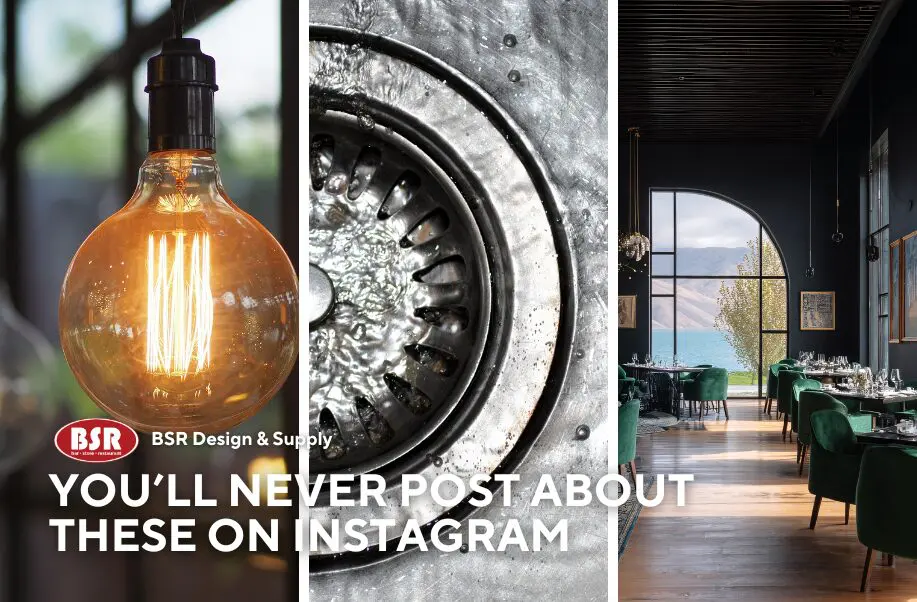
It’s the things that don’t end up on a restaurant’s Instagram feed that can determine whether a restaurant runs smoothly… or struggles every shift.
Some of the most important decisions are the ones no one talks about; here are a few of them:
Lighting That Supports Service, Not Just Style
Lighting isn’t just about setting the mood; it’s also about function.
Have a light that’s too bright? Guests might feel like they’re in a cafeteria. But if they’re dimmed too much, servers have to squint to see tickets, and guests can’t read the menu. Not only that, but the wrong placement can create shadows across plates, making food look unappealing, or a glare that’s uncomfortable during a long meal.
Try thinking of lighting in layers: ambient, task, and accent. Look at lighting as an operational and experiential tool. Ask yourself, is there enough lighting in prep areas? Does the dining area feel warm without feeling too dim?
When lighting is done right? Nobody comments on it; it blends into the experience.
Drainage: Not Glamorous, but Essential
It’s highly unlikely that drainage made it onto your restaurant’s Pinterest or vision board, but it can make or break the flow of a kitchen.
Improper angles, poor placement, or hard-to-access drains can lead to standing water, safety hazards, sanitation issues, and expensive maintenance down the line. Flooring materials matter just as much: slip resistance, durability, cleanability, and how they perform during long, high-volume shifts.
Think of them as part of the pit crew for the kitchen. They’re not necessarily glamorous, but they’re critical for protecting staff, meeting health codes, and keeping kitchens running efficiently.
Clearance and Circulation
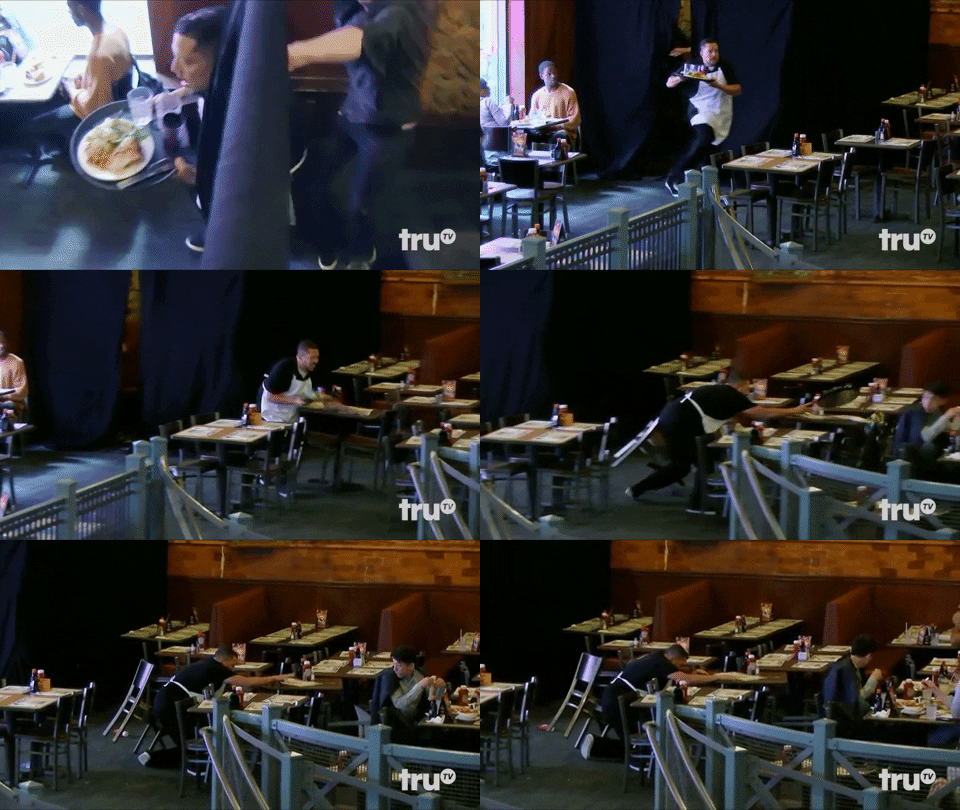
Ever tried on a piece of clothing that you loved but was too small so you couldn’t move? It’s likely that you put it back because it wasn’t functional. Think of your kitchen layout in the same way.
A layout may be beautiful, but it means nothing if your staff can’t move and it’s not functional.
It’s important to carefully plan aisle widths, service path locations, and clearances around equipment, prep areas, and seating. Just a few inches of space can help determine the stress level of a shift.
For guests, good circulation means they’re not constantly bumped by servers or navigating awkward bottlenecks on the way to the restroom. For staff, it means fewer collisions, faster service, and less fatigue.
Flow matters more than people realize.
Tabletop Setups That Shape the Experience
Have you ever been at a restaurant and you’re struggling to find space for everyone’s plates? That could be because tabletop was neglected in the planning process. Tabletop design might feel simple, but it’s one of the most tactile parts of the guest experience.
Table height, chair comfort, how much space is between plate settings, and even the shape of the table all change how long guests stick around and how they feel. Do your plates fit the type of food your serving? Do the tables fit the right number of those plates on them? Can the servers clear the space efficiently without interrupting the conversation too heavily?
A well-designed tabletop setup quietly supports hospitality without ever demanding attention.
The Power of the Unseen

The best restaurants don’t feel complicated; they feel natural.
That’s because hundreds of behind-the-scenes decisions are working together: supporting staff, protecting guests, meeting codes, improving speed, and preventing problems before they start.
These decisions and factors will likely never see the light of day on restaurant vision boards or social media, and we easily understand why. But, this is your reminder to add the unglamorous decisions to your list now, so you don’t suffer later.
Need to start working on these decisions? Let’s get started!

by BSR Marketing | Dec 10, 2025 | Uncategorized
When you think of restaurant problems, it’s easy to picture a slammed line, a broken fryer, or having to 86 one of the most popular dishes on the menu. But the truth is, some big headaches can come from the small stuff too, things like Tabletops, cutting boards, and other Smallwares that disappear into the void with the socks that go missing in the dryer.
These small, everyday items might seem harmless, but they quietly wreak havoc on workflow, slow down service, and frustrate your staff. In this blog, we’re spilling the secrets behind the secret life of tabletop and Smallwares and why these little culprits cause big problems.
Cloudy Glassware
What happens: Glasses come out hazy, spotted, or discolored after washing.
Why it happens: Hard water, too much detergent, and overcrowding in the dishwasher. Basically, science hates your glasses.
Why it matters: Cloudy glasses look bad to guests, frustrate servers, and make your fancy cocktails less social media worthy.
Quick Fix: Check detergent levels, maintain water softeners, and give glasses some elbow room.
Plates with Personality
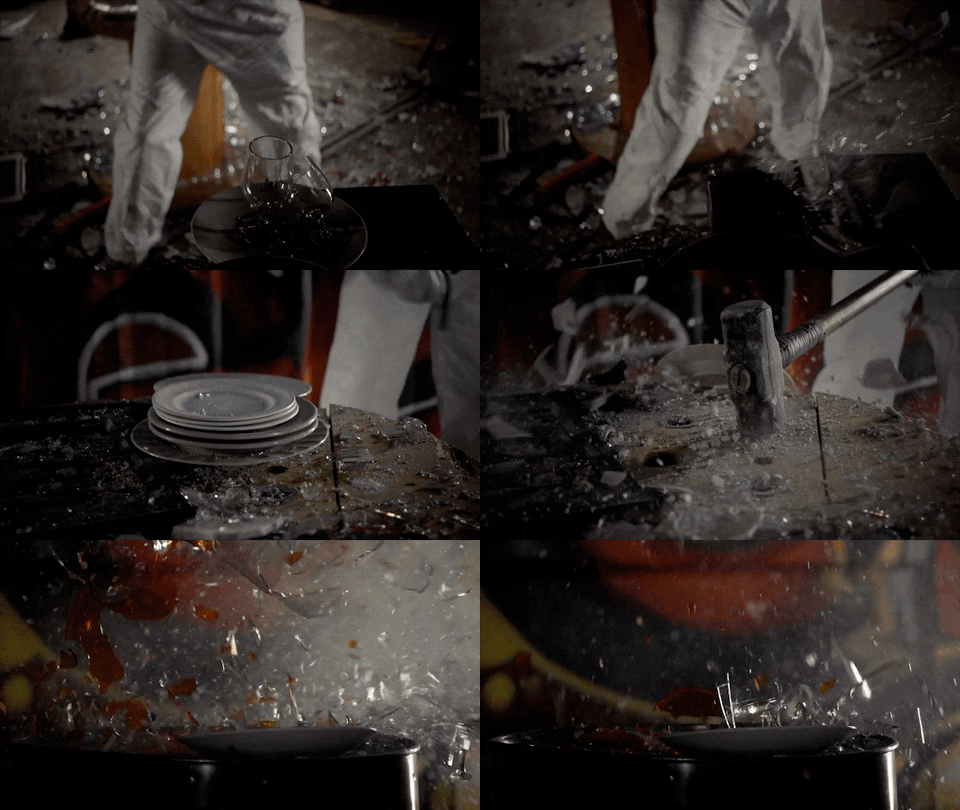
What happens: Chips, scratches, mismatched sets, or plates that seem to vanish into another dimension.
Why it happens: Aggressive washing, counter sliding, and menu changes that create random plate chaos.
Why it matters: Chipped or mismatched plates can slow plating, frustrate staff, and make your beautiful dishes… less beautiful.
Rogue Smallwares
What happens: Spoons, tongs, ladles, and microplanes mysteriously disappear.
Why it happens: Things get left in prep stations, borrowed and never returned, or somehow swallowed into the abyss.
Why it matters: Missing tools slow prep and stress literally everyone out. No one wants a panic attack over a lost microplane.
Quick Fix: Label utensils, assign storage zones, and train staff to return what they borrow (simple, but effective).
The Domino Effect
What happens: Tiny problems snowball into chaos during a rush.
Why it happens: One warped board here, one missing ladle there… suddenly your whole line is in slow motion.
Why it matters: Workflow bottlenecks = frustrated staff, slower service, and unhappy guests.
Quick Fix: Regular audits keep your boards, plates, glassware, and other Smallwares in check before staff stage a mutiny.
Conclusion

The “small stuff” in a restaurant isn’t so small after all. Tabletops, cutting boards, utensils, and glassware quietly shape how smoothly your kitchen runs and how happy your guests leave.
A little love, rotation, and organization go a long way. Keep the chaos at bay, and maybe, just maybe, you can finally have a shift where nothing disappears, nothing warps, and nothing gets overcrowded in the dishwasher.
by BSR Marketing | Nov 28, 2025 | Uncategorized
When restaurant owners think about a new build or remodel, they often picture the end goal: shiny equipment, perfectly plated dishes, and a kitchen that runs like a well-oiled machine. What they don’t see is the behind-the-scenes design process that is needed to successfully bring all of that to life.
We think kitchen design deserves a lot more credit in the process, so we talked with our head designer, Brandon, to hear a bit more about what happens from when you bring us your vision to the final product.
What a Layout Actually Tells You (and What It Doesn’t)
Layouts are more than just lines and measurements. It’s the first time your vision is brought to life visually. The thing with layouts, though, while crucial in the design and construction process, is that they don’t tell the full story. 2D doesn’t always show bottlenecks that can arise.
Because of this, we asked Brandon for an example of this, and he said,
“One of the best examples of something that looked totally fine in 2D but became a problem once we dug deeper is when we try to put two levels of shelving over a slicer. Those things are taller than we think and need lots of clearance.”
In instances like that, we can’t actually see how tall the slicer is or what it’ll look like with the shelves. Why? Because in a 2D drawing, you see the placement of the equipment, but you can’t see its size in a bird’s-eye view.
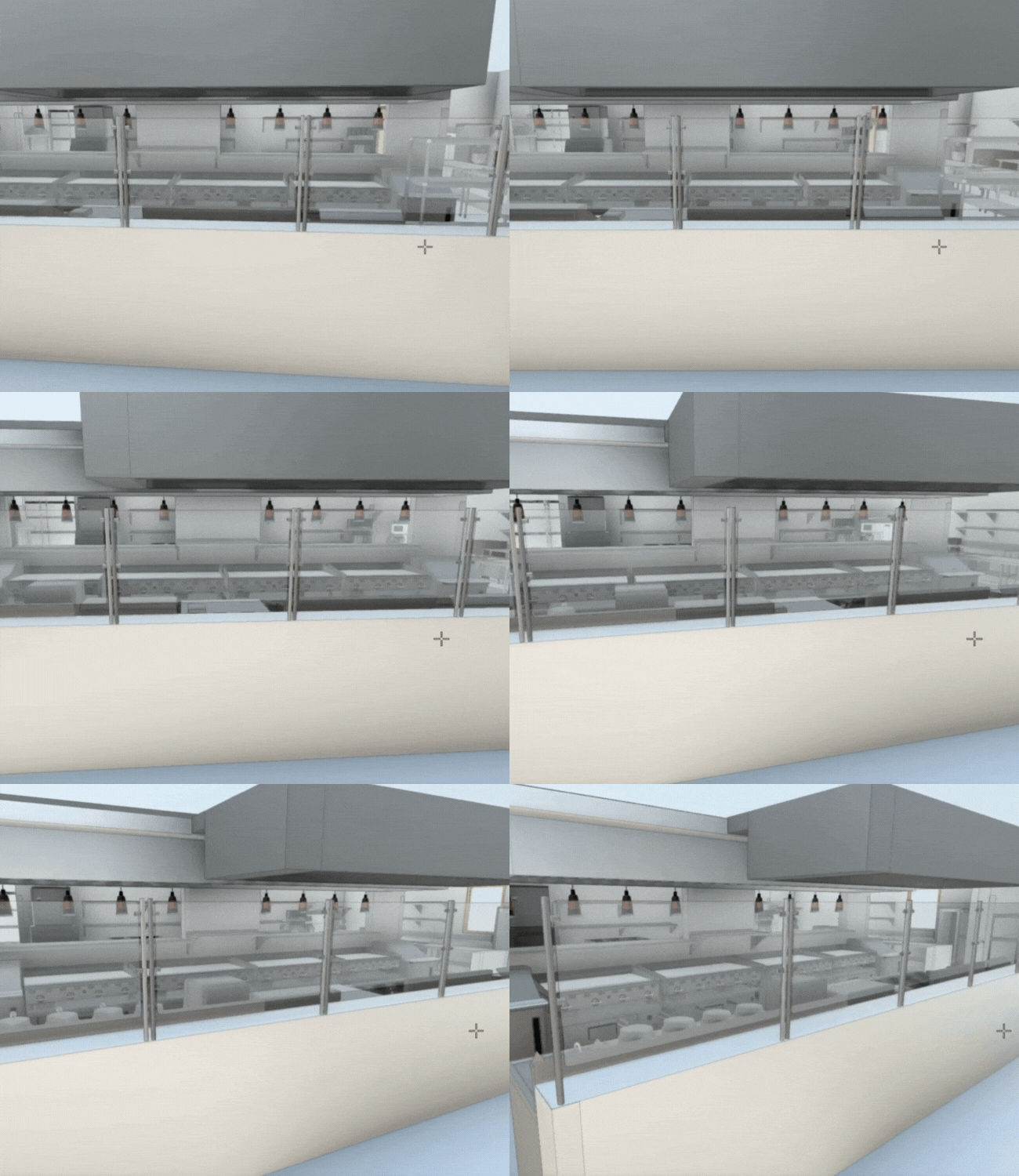
A layout can show spacing, appliance placement, and electrical layouts, but it can’t always convey height, sight lines, or flow. That’s where the magic of 3D comes in.
The Handoff From 2D to 3D
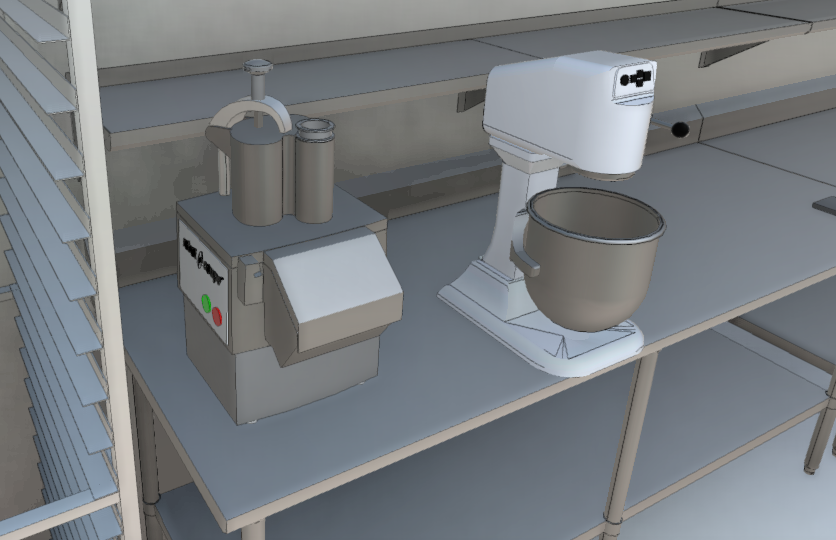
Once the project is moved to Revit, a 3D design software, the design comes alive. “We can quickly see which walls should be full walls versus pony walls, as well as sight lines we may or may not want guests to see,” Brandon explains. For example, the image above shows how a 3D rendering showed that the equipment is too tall to fit under the shelf. This makes it inefficient, taking up more counter space that could be used for other things. Open kitchens? Perfect for guests. Dirty dishes in view? Not so much.
The 3D model allows you to simulate the real-world experience before it’s built. You can walk through the space virtually, check equipment clearances, and ensure everything works before you have a single screw installed. This step constantly catches issues early, saving time, money, and stress during the installation.
Collaboration at Every Step
Good design can’t be done in isolation. “We collaborate with the project manager and client at every step of the way,” says Brandon. “The more the PM and customer are involved, the better we can assure we’re doing what they want while fitting the budget and the needs of the space while keeping ROI high and making sure it actually works the way it’s supposed to.”
Early input is critical. Menu details, accurate measurements, and even photos of existing spaces help understand the client’s needs and goals. That information allows our designers to design a kitchen that supports the menu, workflow, and overall guest experience.
Before and After: Bringing Dreams to Life
The best part of the process? It’s hands down seeing your project come to life. Take it from Brandon:
“We are here to make their dreams come to life. First in the virtual world, then in the real world—and we truly love what we do!”
From small adjustments to shelving heights to major layout changes made when seeing the design in 3D, each project involves a careful balance of art, math, and practical experience. This combination of 2D and 3D virtual models allows us to anticipate challenges before they happen, while collaboration ensures the kitchen is functional, efficient, and everything you want it to be.
Why It Matters
Good design is invisible when it’s working well, because it just… well, works. A layout that looks “good enough” on paper can cause chaos (or major costs) in the field.
Detailed design work, from the first layout to the final 3D model, helps:
- Avoid expensive change orders
- Prevent workflow issues that slow down service
- Catch clearance and code conflicts early
- Reduce project overrun
- Increase long-term ROI by designing around how the space actually functions
Great design doesn’t just make a kitchen look good. It makes it profitable, efficient, and built to last.
At the end of the day, a well-designed kitchen is more than layouts and Revit models; it’s the foundation of a successful restaurant. And behind every great layout is a team full of people like Brandon that are passionate about turning dreams into reality.
by BSR Marketing | Oct 30, 2025 | Uncategorized
If your kitchen feels like it’s “just barely hanging in there,” the holidays will find a way to prove it. As catering orders ramp up, reservation lists fill, and service hours stretch longer, even the more reliable kitchens can start to feel the pressure. The holiday season doesn’t just emotionally test your team; it tests your equipment as well.
So, before you start ordering replacements for everything that hums, heats, or holds… take a breath. Some upgrades make all the difference, but for your wallet’s case, some might have to wait. Here’s how to upgrade smarter, not harder.
Start with the gear that slows you down
If your oven “needs a few minutes” to preheat or your fryer takes forever to recover temperature, that’s not quirky… It’s your equipment warning you. Sluggish equipment takes time, energy, and consistency from your staff when you need it the most.
Focus first on the items that impact your service speed the most:
Ovens, fryers, and grills that can’t keep up with back-to-back orders.
Dishwashers that cause a bottleneck and back up the entire kitchen.
Refrigeration units that can’t seem to hold temp during the busiest hours.
The seconds you save by replacing the things that slow you down the most add up when you’re 50 tickets deep.
Don’t Forget the Small Stuff (That isn’t small at all)
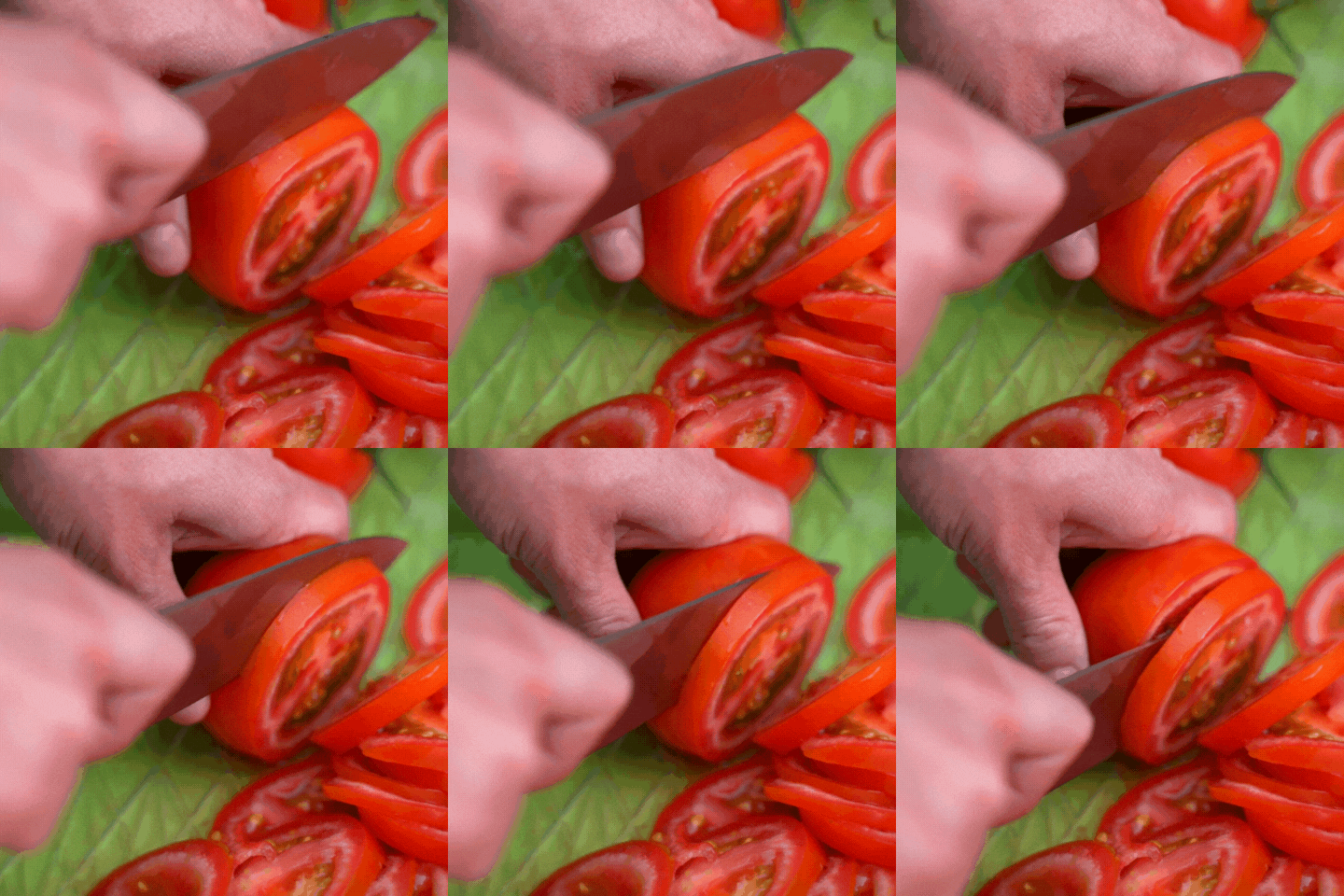
Tongs that won’t grip, pans that are warping, knives that dull after a few uses: Smallwares might seem like low priorities, but when you’re turning tables fast, every detail matters.
Replacing these essentials now saves your team frustration (and wasted time) that comes from fighting against tired tools. It also prevents last-minute scrambles to borrow or replace mid-service, which always happens at the worst possible time.
Replace: Bent utensils, old and permanently dirty cutting boards, loose-handled tools, or dull blades
Restock: Back-up sets of the items your staff fights over nightly… spatulas, sheet pans, ladles, tasting spoons… whatever’s relevant for your kitchen.
Consider this your pre-rush inventory sanity check.
Check What Keeps Things Cold
When walk-ins and undercounters start working overtime, they don’t just run warmer; they run less efficiently, using more energy and putting your food safety at risk.
Before the rush hits:
Inspect gaskets and door seals for cracks or gaps.
Make sure temperature gauges are calibrated.
Clear out blocked vents or fans.
If units can’t hold temp during normal hours, that’s a clear sign to replace them before demand spikes.
A fridge that quits in December is more than an inconvenience… it’s an expensive holiday surprise.
Get ahead on cleaning and maintenance.
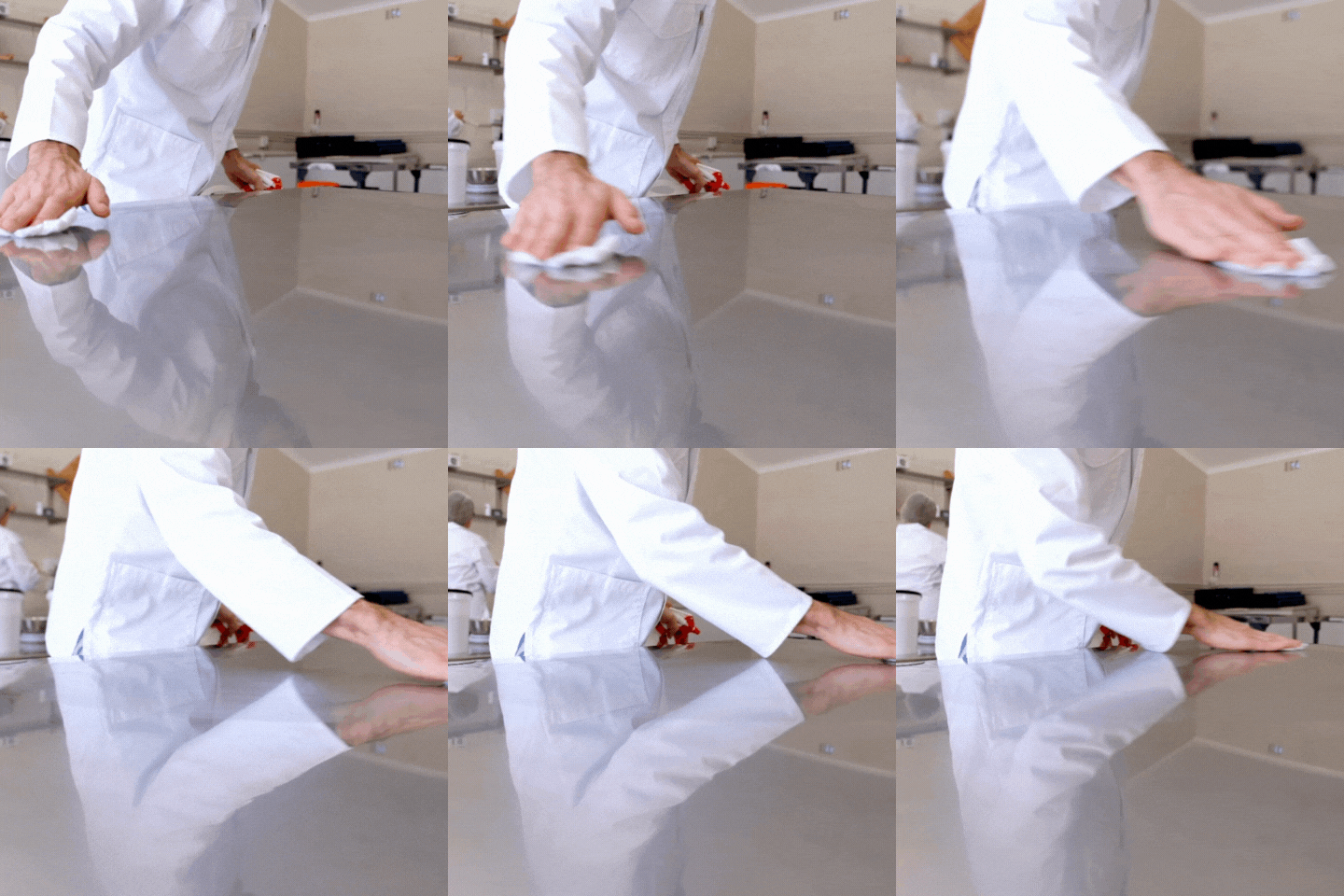
Not everything needs replacing; sometimes it just needs attention. A thorough cleaning and tune-up can bring sluggish equipment back to life.
Schedule time for:
Descaling steamers
Cleaning fryer coils and change the oil
Replacing filters on ice machines and steamers
Inspecting hood and vent systems
Cleaning and tune-ups are the easiest way to stretch the lifespan of your investment and boost its performance before one of the busiest times of the year.
Make a Priority List, not a Panic List
It’s tempting to see everything as urgent when the rush looms, but upgrades don’t need to happen all at once. Start by identifying which replacements have the biggest operational payoff and which can wait until after the holidays.
Here’s a simple way to rank the priorities:
Efficiency upgrades – Saves time, energy, and labor costs right now
Safety Upgrades – Prevents breakdowns, food loss, and employee accidents
Future Upgrades – Nice-to-have improvements that can be budgeted for later
A little planning now can save a lot of stress later.
The Takeaway

Holiday season chaos doesn’t have to take your kitchen down with it. The smartest operators aren’t just working harder; they’re working with equipment that’s ready to face the demand.
Upgrading the right pieces now helps you stay consistent, confident, and calm when orders start piling up.
Let BSR help you prioritize upgrades that matter most before the holiday season. That way your kitchen stays merry, bright, and running right through the rush.

by BSR Marketing | Oct 15, 2025 | Uncategorized
It’s your first day working at a restaurant, dinner service has barely started, and you’re already confused. Plates clatter, timers are relentlessly beeping, and somewhere between the grill and the dishpit someone calls out, “I’m in the weeds!”
You freeze. Weeds?! There are no plants in here; what on earth are they talking about?
Moments later you hear:
“Fire table twelve!”
“86 on the salmon!”
“It’s dying in the window!” (something’s dying in here?!)
It’s chaos as an outsider, but to everyone else, it’s a language of its own. It’s fast, efficient, and strangely musical when you get used to it.
The kitchen is full of shorthand phrases like this, ones that convey very important information in just a few words. It’s crucial for any food service workers to know (especially kitchen staff).
Here’s what the phrases listed above mean:
In the Weeds: “Our station is overwhelmed. SOS”
When tickets are stacking faster than you can plate them, you’re officially “in the weeds.” Every kitchen has been there… countless times.
What to do: Offer a hand, if you can. Run food, plate a dish, and refill prep stations. Even small help when you can helps keep the kitchen moving and builds a team that trusts each other.
Make sure you aren’t leaving your own station to flounder in the process; we wouldn’t want two in the weeds!
It’s Dying in the Window: “Why in the World is this still sitting in the Pass?”
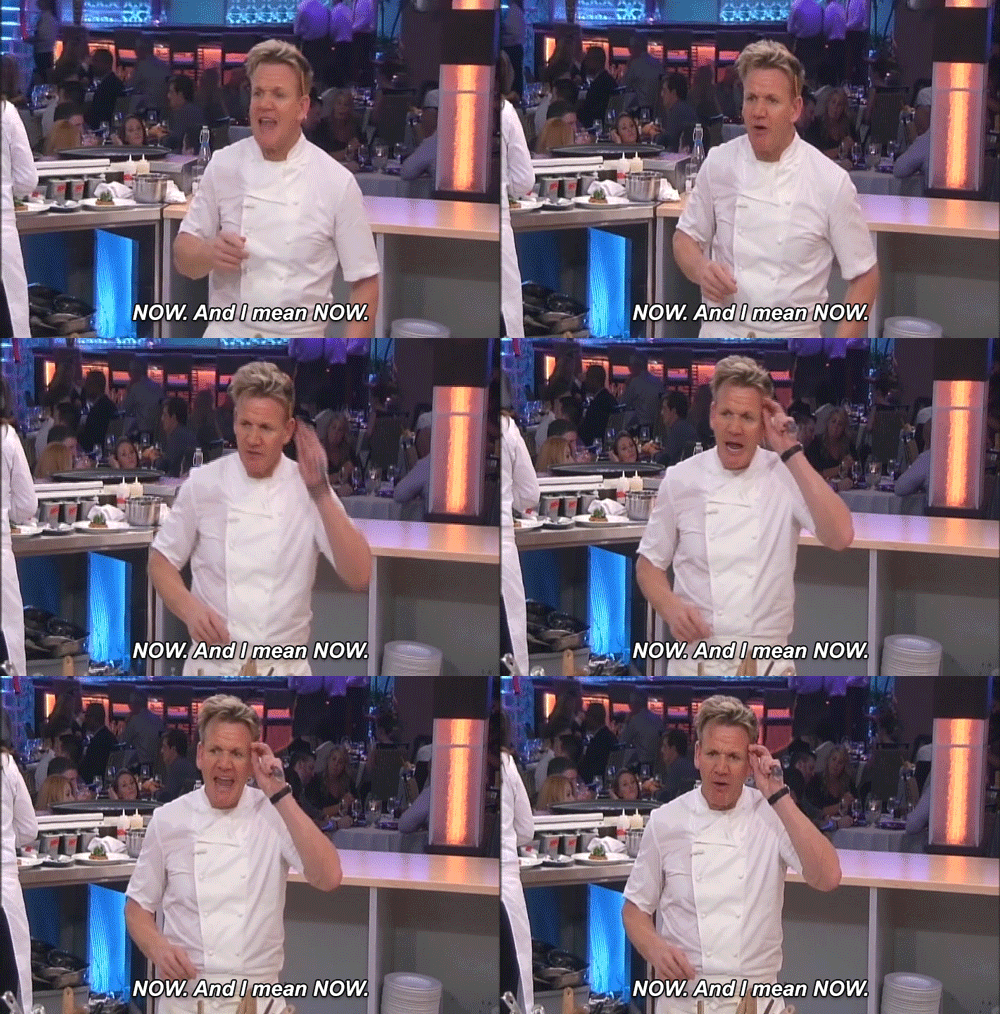
Don’t worry; when someone says this, nothing is actually dying. “It’s dying in the window” is a way for the Chef to say a dish has been sitting in the window for too long and needs to get to the customer ASAP. In this case, ‘the window’ refers to the shelves completed dishes go to, to stay warm under a heat lamp if needed or just wait on a shelf to be served. The goal is to only have a dish sitting in the window for a few minutes.
What to do: If possible, help remind expo or front of house that the dish is ready to go out. And if you are on expo? Get it out to the dining room. Quickly. Every second the plate sits on the shelf, the more the texture, presentation, taste, and more degrades.
On the Line: The place cooking lives
The “line” is where the cooking happens: grilling, frying, sautéing, and more. You could call it the choreography of the kitchen.
What to do: Respect the flow of the kitchen. Stay in your lane unless Chef says otherwise, keep your station clean, and try to anticipate what’s coming next… but be ready for things to change on a dime. Smooth lines make for smooth nights.
86: Don’t even think about this dish anymore
When something is “86’d,” it’s gone. Out of stock. It can be a menu item, an ingredient, or even a side dish. Whatever is attached to the phrase, it doesn’t exist for the night until said otherwise.
What to do: Be aware of it and communicate fast. If you’re the one calling it, you need to shout it from the rooftops. Everyone needs to know, from the prep cooks to the entire front-of-house staff. That way orders can be updated as needed.
Fire: Your New Priority
It may seem like a bad idea to call out “fire” in a kitchen full of flammable things. But, in this case, it doesn’t mean there are ill-placed flames anywhere; it means there’s something that needs to be started immediately. Timing is everything; this call keeps the kitchen’s rhythm in sync.
What to do: When you hear it, double-check your timing. Make sure your station’s part of the order involved is ready when it needs to be. That way it can hit the window right when it’s necessary.
Most importantly: Breathe.
It might sound like chaos at first, but there’s a method to the madness. Kitchen lingo exists because there’s no time for long-winded explanations in a kitchen when orders need to be flying out to the dining room. Every “fire” and “86” saves seconds that can be spent elsewhere, and those seconds add up.
Whether you’re a new restaurant owner learning how to best work with your staff or a new employee, if you’re overwhelmed with the language used to organize a kitchen, breathe and ask questions. Work to learn the language, and gradually, the chaos will turn into something that feels like a well-oiled machine.
In a great kitchen, this communication isn’t just helpful; it’s a secret ingredient that keeps things running.